
Why a TMS is not a cost, but the beating heart of your transport company
Many small and medium-sized transport companies struggle with the same question:
“Is a TMS worth that amount per truck?”
A valid consideration. But it is often based on a false comparison.
You still too often judge software as a separate tool.
In reality, a modern TMS can be compared to your rolling stock: you don't choose the cheapest truck, trailer, or tires, but rather reliability, continuity, and return on investment.
The same applies to your digital backbone.
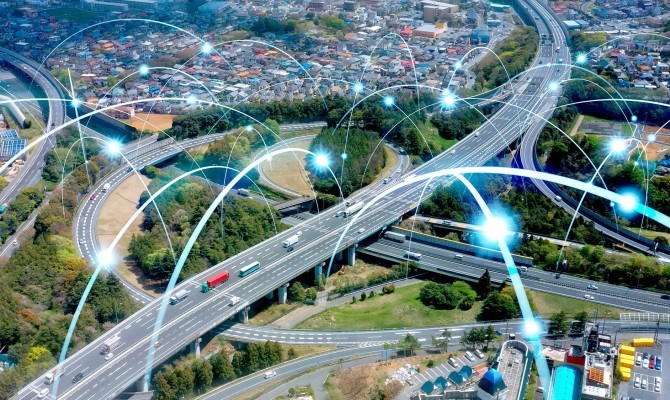
A TMS is not an extra. It is your operational foundation.
Transport today is no longer paper-based planning.
It is a data-driven operation in which customers expect real-time information, accounting must run flawlessly, and planners need a continuous overview.
A modern TMS brings all this together in a single platform:
- Digital orders via the driver app
- Track & trace, ETAs, and geocoding
- Customer and supplier portal
- Automatic invoicing
- Real-time insight into costs and margins per trip
- One integrated system instead of Excel and separate tools
That's not a luxury. That's what customers consider normal today.
Your IT is professionally organized right away
At TMS | IoT, it's not just about functionality, but also about reliability.
Everything runs in the cloud, including:
- Hosting and performance
- Backups and data protection
- Security and continuity
- Updates and maintenance
No servers of your own.
No hidden IT risks.
No nightmares in the event of a crash or data loss.
This is crucial for start-ups and growing companies:
you can work professionally from day one, without an internal IT department.
Yes, there are start-up costs. And that makes sense.
Implementing a TMS is not a “plug & play” tool.
We look at your planning, your rates, your customers, your invoicing, and your accounting.
Links to Exact Online or other systems also require time and coordination.
Just like with good equipment, these are one-time investments that pay for themselves through:
- Less manual work
- Fewer errors and corrections
- Faster invoicing
- Better cash flow
- A scalable organization
If you only look at the lowest entry cost, you'll pay for it later with inefficiency and missed growth.
The real question is not whether you digitize.
The real question is when.
Will you do it today, in a controlled and phased manner, or later under pressure from customers, volumes, and errors?
Transport is becoming more digital every day.
Those who lay a solid digital foundation now will build a business that is ready for the future.
And that is exactly what a TMS is for. 🚛📊